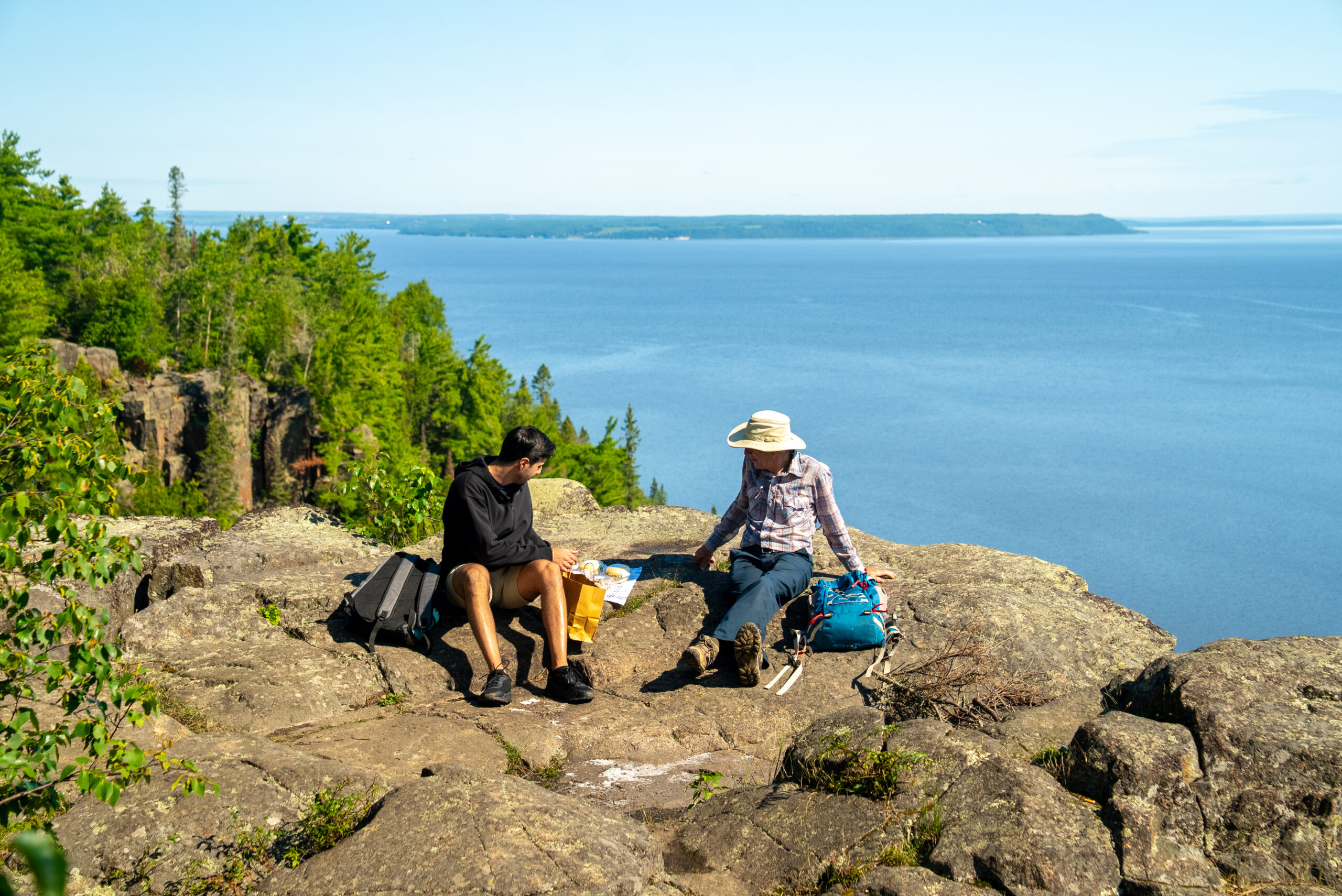
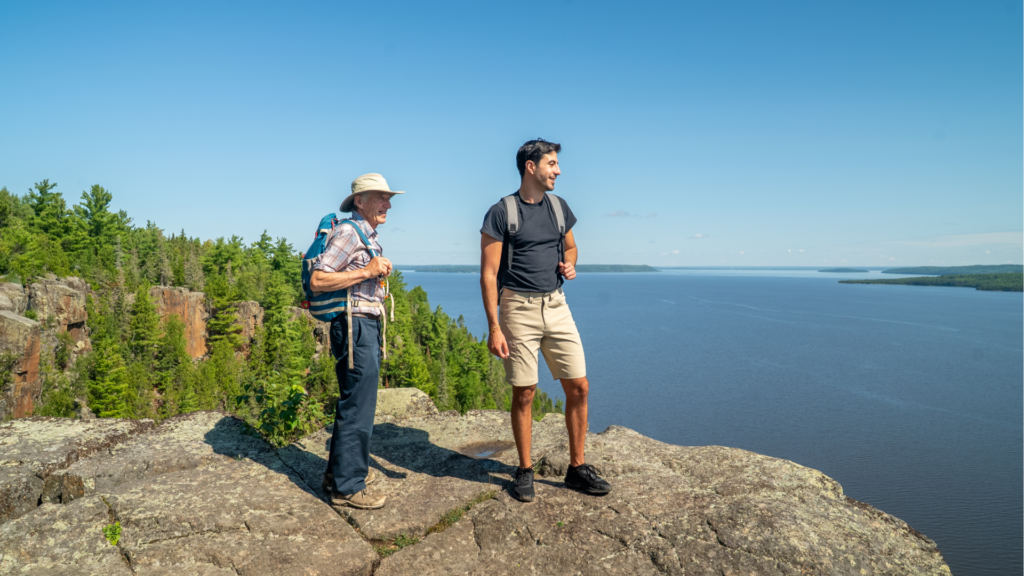
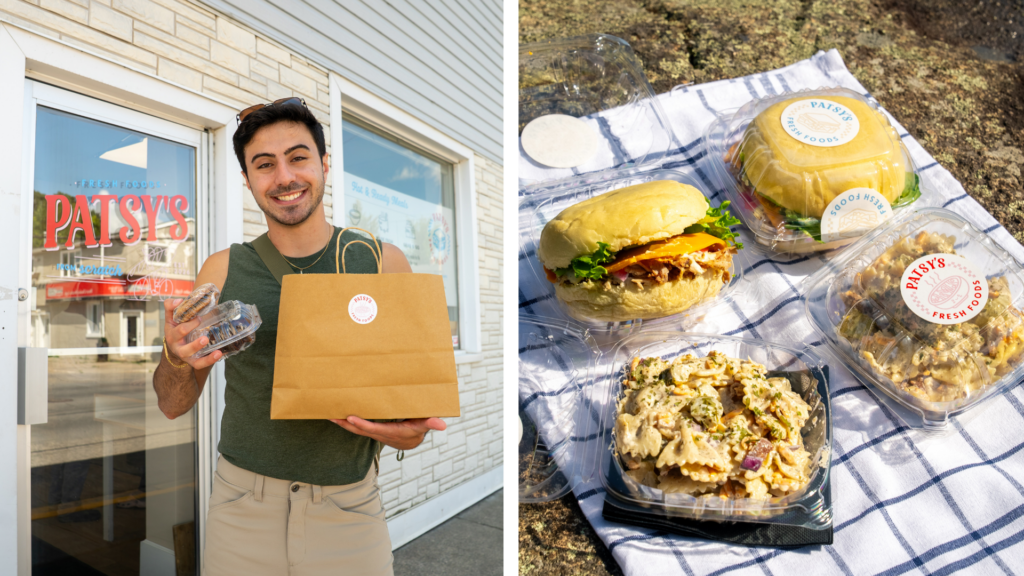
Sandwiches secured, we met Murray Muir of Nastawgan Trails and headed for Devil’s Rock, also known as Mani-doo Aja-bikong, or Spirit Rock.
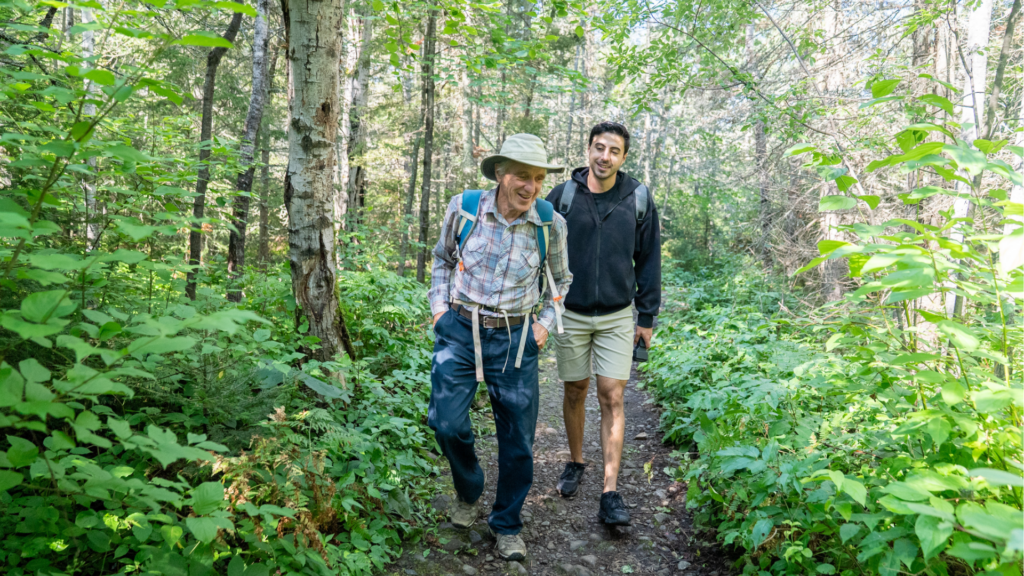
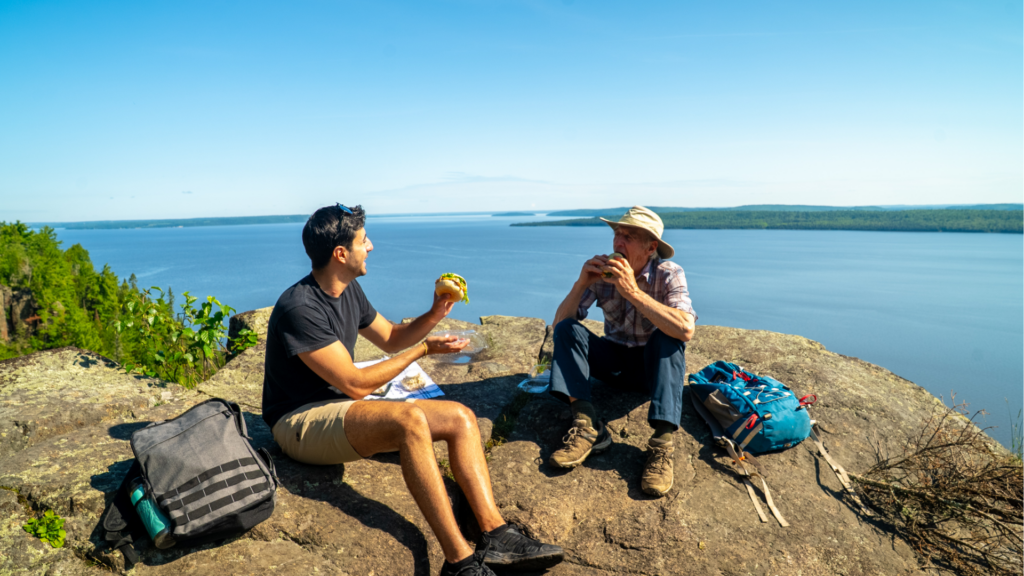
The trail winds through the forest before suddenly delivering you to the edge of a dramatic escarpment overlooking Lake Temiskaming. Devil’s Rock rises roughly 300 feet above the water, with a sweeping 180-degree view across the lake. It’s breathtaking — and with no railings along the cliff edge, worthy of plenty of caution too.
Murray shared stories of the land, the local trail network and the volunteers who help maintain it. And then, at the top, we unpacked lunch.
Was it the altitude? The hike? The view stretching out across the lake? Whatever it was, that roast beef sandwich tasted especially good up there.
It’s a simple experience, but one that gets to the heart of culinary travel. Food doesn’t always need to be the destination. Sometimes it comes along for the adventure—and becomes part of how you remember a place.
Pick a Taste of the North
From eating above the landscape, we headed straight into it.
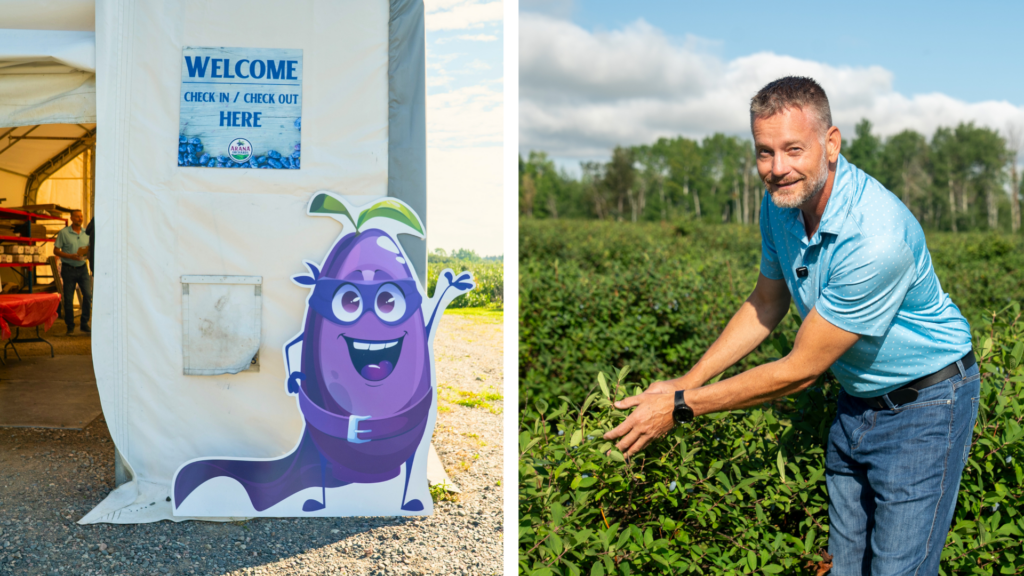
At Arana Orchards, that meant stepping between rows of haskap bushes and tasting one of the fruits that thrives particularly well in Northern climates.
Haskaps are elongated, deep blue berries with a flavour that can land somewhere between blueberry, raspberry and black currant. They’re remarkably cold hardy, making them well suited to places where winter is more than a passing inconvenience.
Our hosts told us Arana is Ontario’s largest haskap grower, and we got to experience the crop in perhaps its purest form: picking the berries ourselves and eating them in the field.
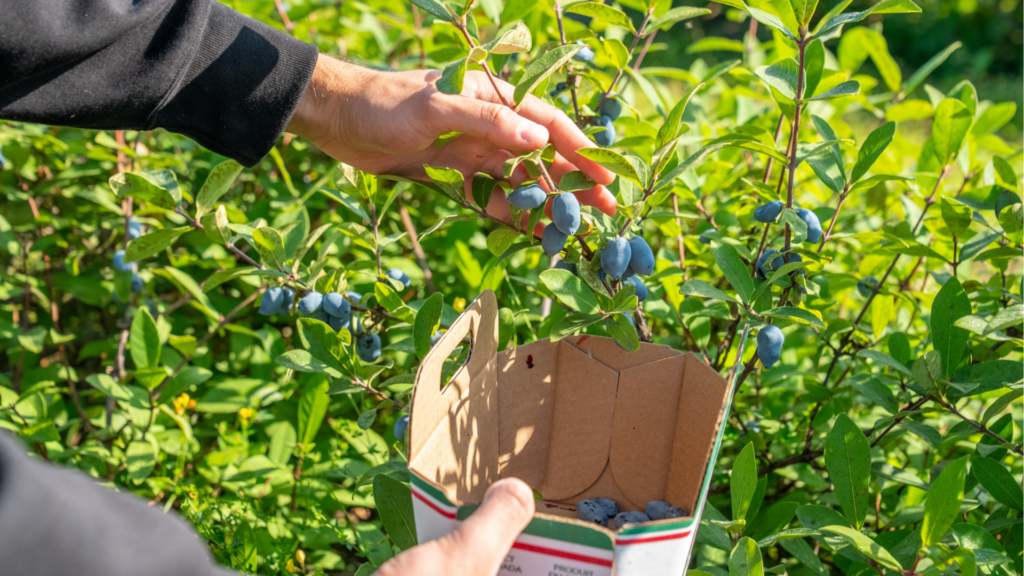
We tasted varieties called Beauty and Beast, both sweet, juicy and surprisingly delicate. When they’re perfectly ripe, it can take little more than a tap to knock them from the branch.
That fragility makes standing in the field feel all the more special.
Most of the time, we experience agriculture at the end of a long chain. Produce has been picked, sorted, packed, transported and displayed before we ever encounter it. Here, the distance between plant and palate is a matter of inches.
And if you want to bring that flavour home, Arana turns its haskaps into products including jams, pepper jelly, vinaigrette, freeze-dried berries and more, some of which can be found at retailers around the region.
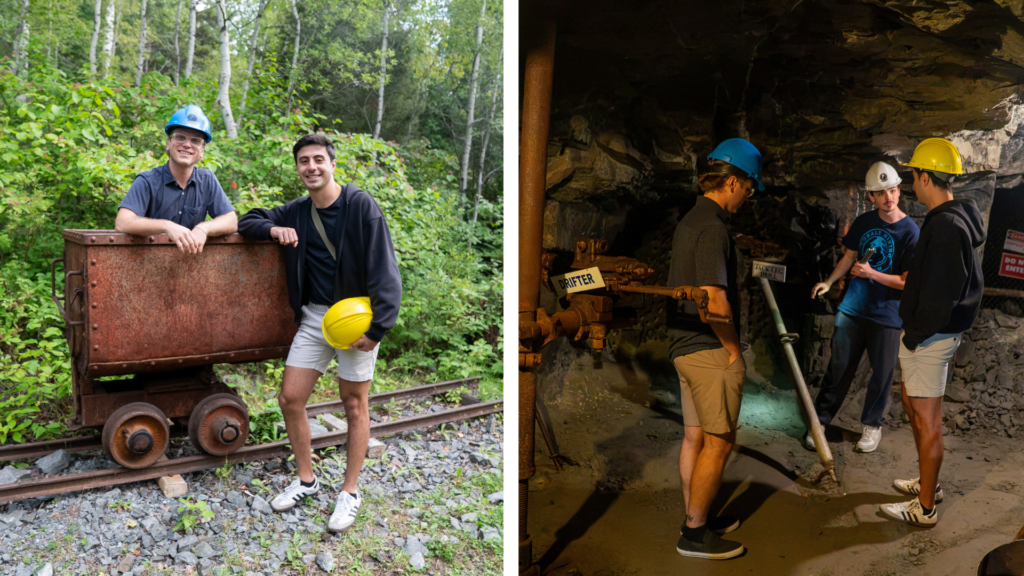
And when we came back above ground, it was time for tea.
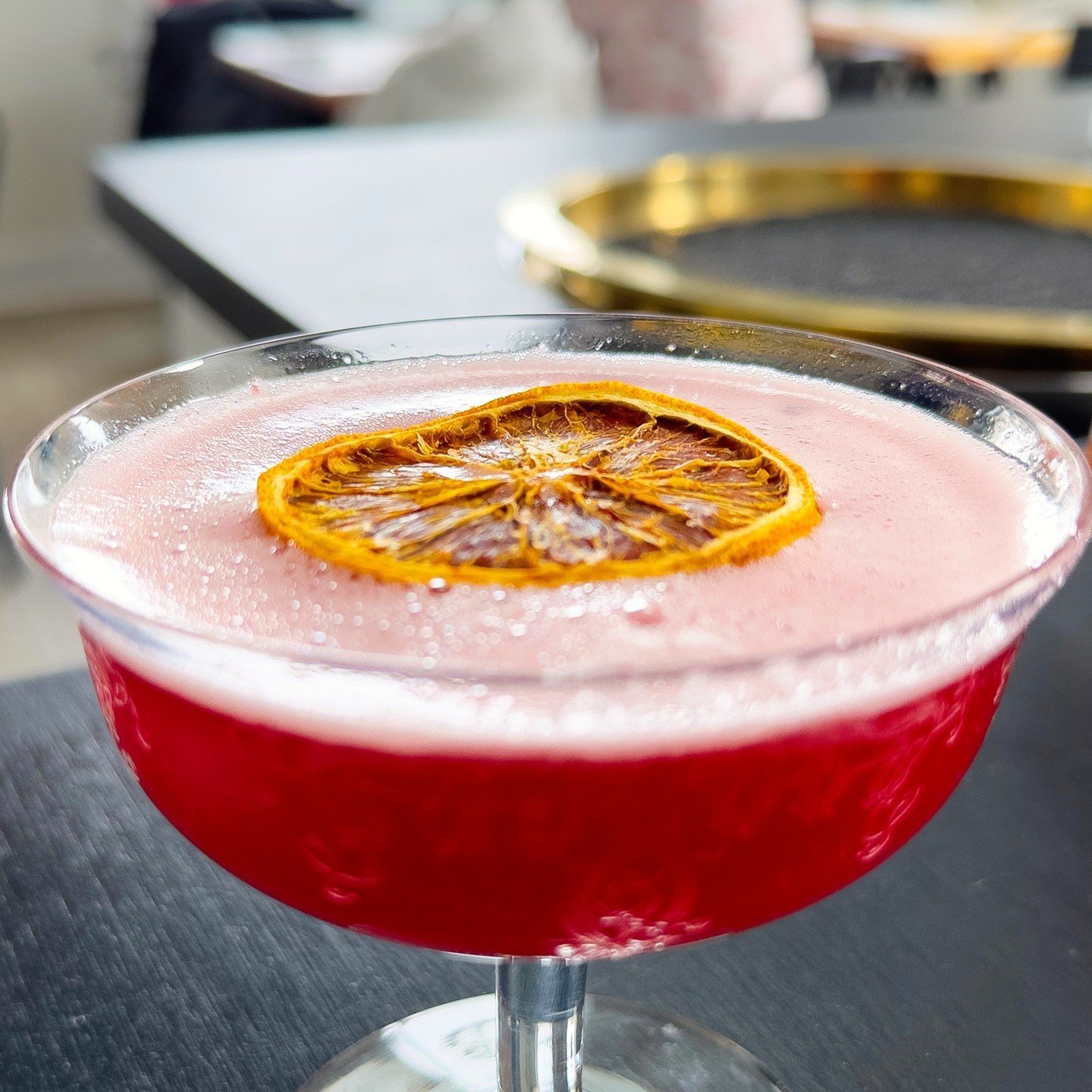
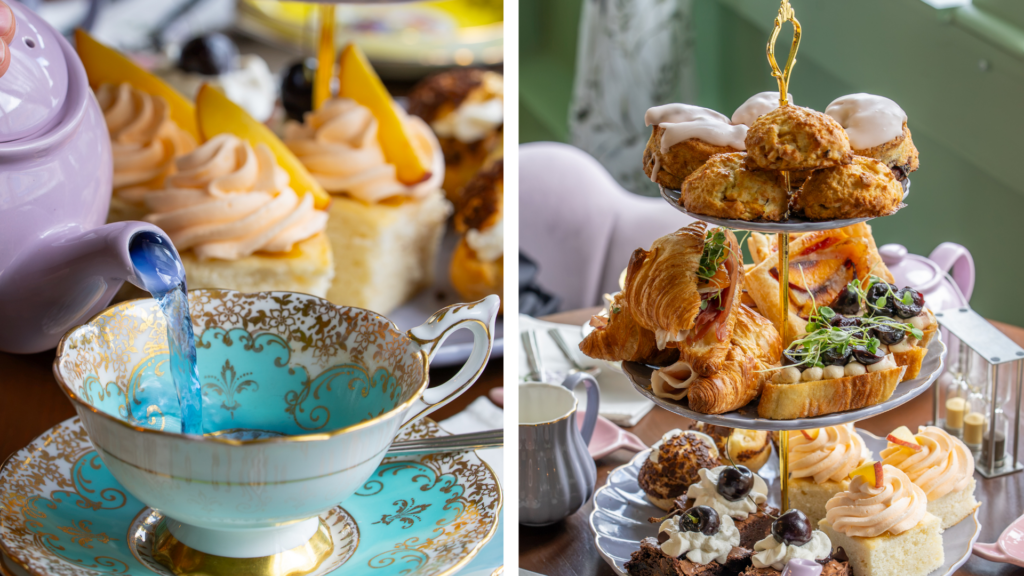
Step inside The Lavender Fox and the mood changes completely. The tearoom is whimsical and elegant, filled with beautiful details and the sort of atmosphere that makes you instinctively slow down. Owner Lola Angus is a certified tea sommelier and cocktail mixologist, and the menu draws on her love of botanicals, spices and seasonal ingredients. Our high tea brought house-made sandwiches and desserts alongside pots of tea — a wonderfully civilized contrast to where we’d just been.
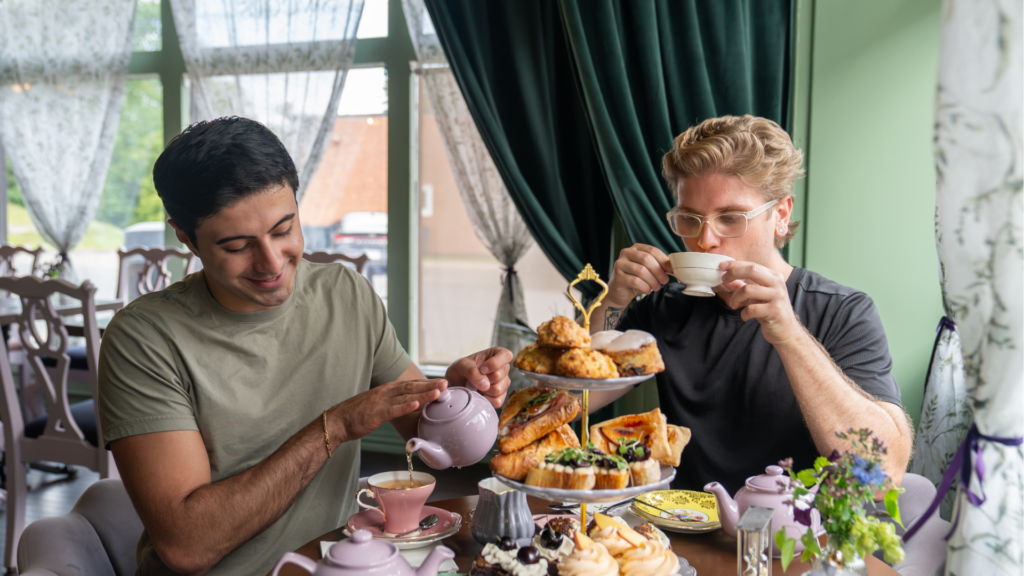
The building itself tells an extraordinary story. The Lavender Fox operates inside the former Coniagas Mineshaft No. 4 headframe and describes itself as the only tearoom in the world located in a historic mining headframe.
After mining ceased in the 1920’s, local businessman Anthony Giachino converted the former shaft house into a grocery and meat market. And he found an ingenious use for what remained beneath his feet: cold air rising from the mine shaft was used to help cool the meat and vegetables in the shop. The building would go on to house an assortment of businesses over the decades before eventually becoming The Lavender Fox.
So there you are, sipping tea and eating delicate sandwiches in a building that once sat above a working silver mine and later used that very mine to keep groceries cold. Only in Cobalt!
Pull Over for a Roadside Classic
Not every great culinary experience needs a farm-to-table philosophy or a historic building. Some just need a transport truck sticking through the wall.
Gilli’s Truck Stop Restaurant is the kind of roadside institution road trips were made for. Inside, the theme is anything but subtle: truck-inspired décor fills the restaurant, counters resemble truck beds and the front end of a massive semi appears to burst straight into the dining room.
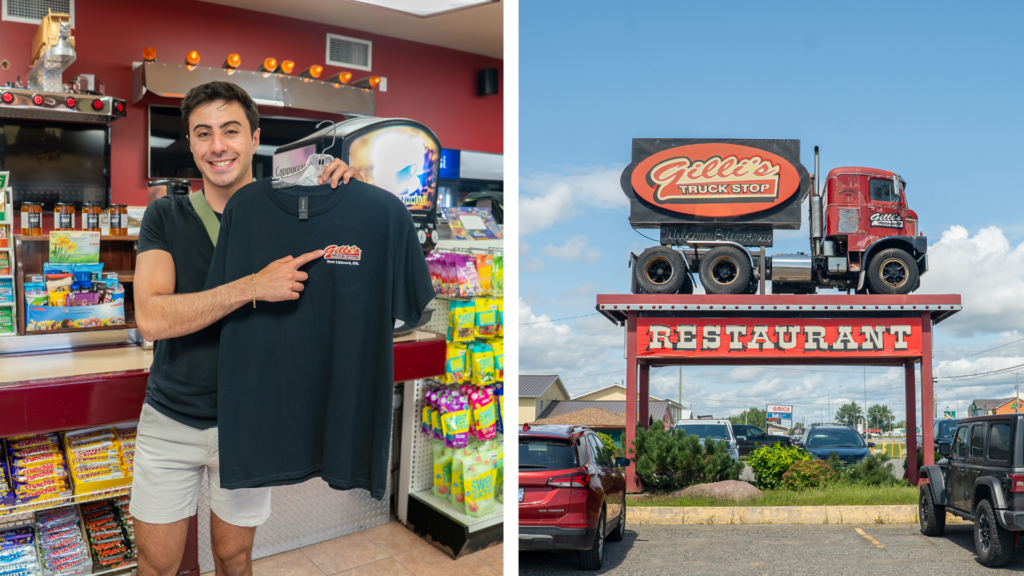
It’s quirky. It’s nostalgic. And after a few days of farms, hikes, tastings and tours, it’s an excellent place to lean into some classic comfort food. We did exactly that with poutine, a chicken wrap and a good old-fashioned BLT.
Culinary tourism isn’t only about seeking out the rarest ingredient or the most ambitious chef. The places communities gather—the diners, coffee shops, bakeries and roadside restaurants that have fed generations of locals and travellers—tell their own stories about where we are.
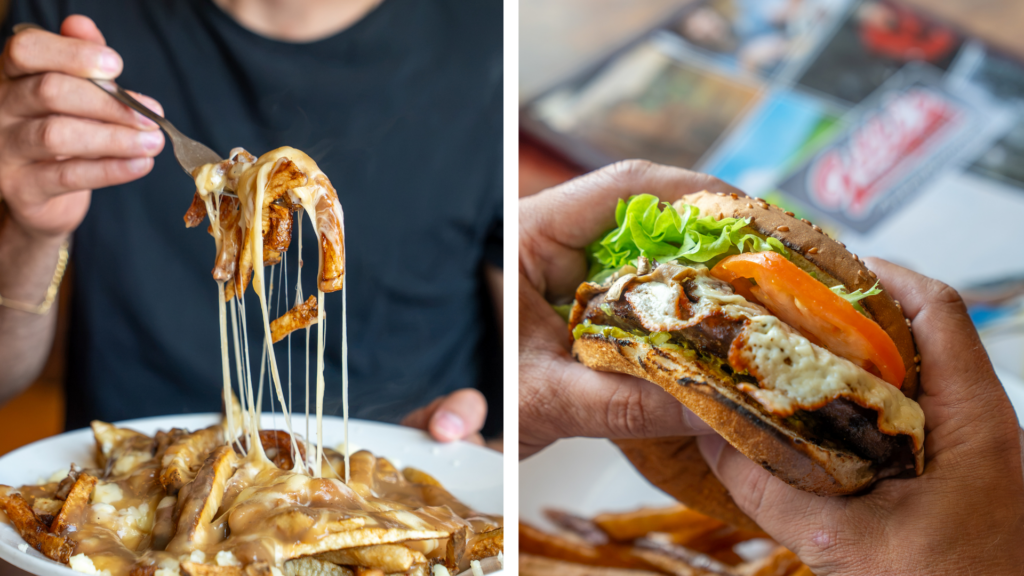
Sometimes you want to contemplate terroir. Sometimes you want fries covered in gravy and cheese curds underneath a giant truck. We strongly recommend making room for both.
One Last Look
Our final stop on the way home took us upward again.
Atop Caribou Mountain, the Temagami Fire Tower gave us one last panoramic look across the lakes and forests of Northeastern Ontario. After days spent eating our way across farms and fields, up cliffs and even underground, it felt like an appropriate place to finish.
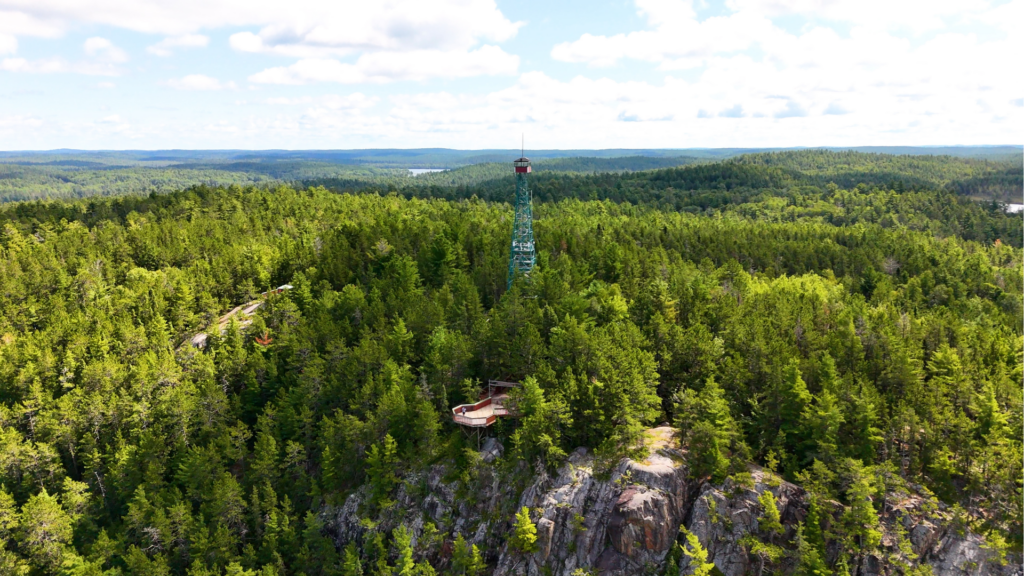
Because what made the food experiences in Temiskaming memorable was eating a sandwich after earning the view, picking a berry from the plant that grew it, sitting down for high tea inside a building whose story reaches deep beneath the streets of Cobalt and pulling off Highway 11 for the kind of lunch stop that makes a road trip a road trip.
Sometimes, to really get a taste of a place, you have to go above ground and below.