Spring Bloom Acres
175631 Flemings Rd, Haileybury (View Map)
Few foods tell the story of a landscape quite as literally as honey.
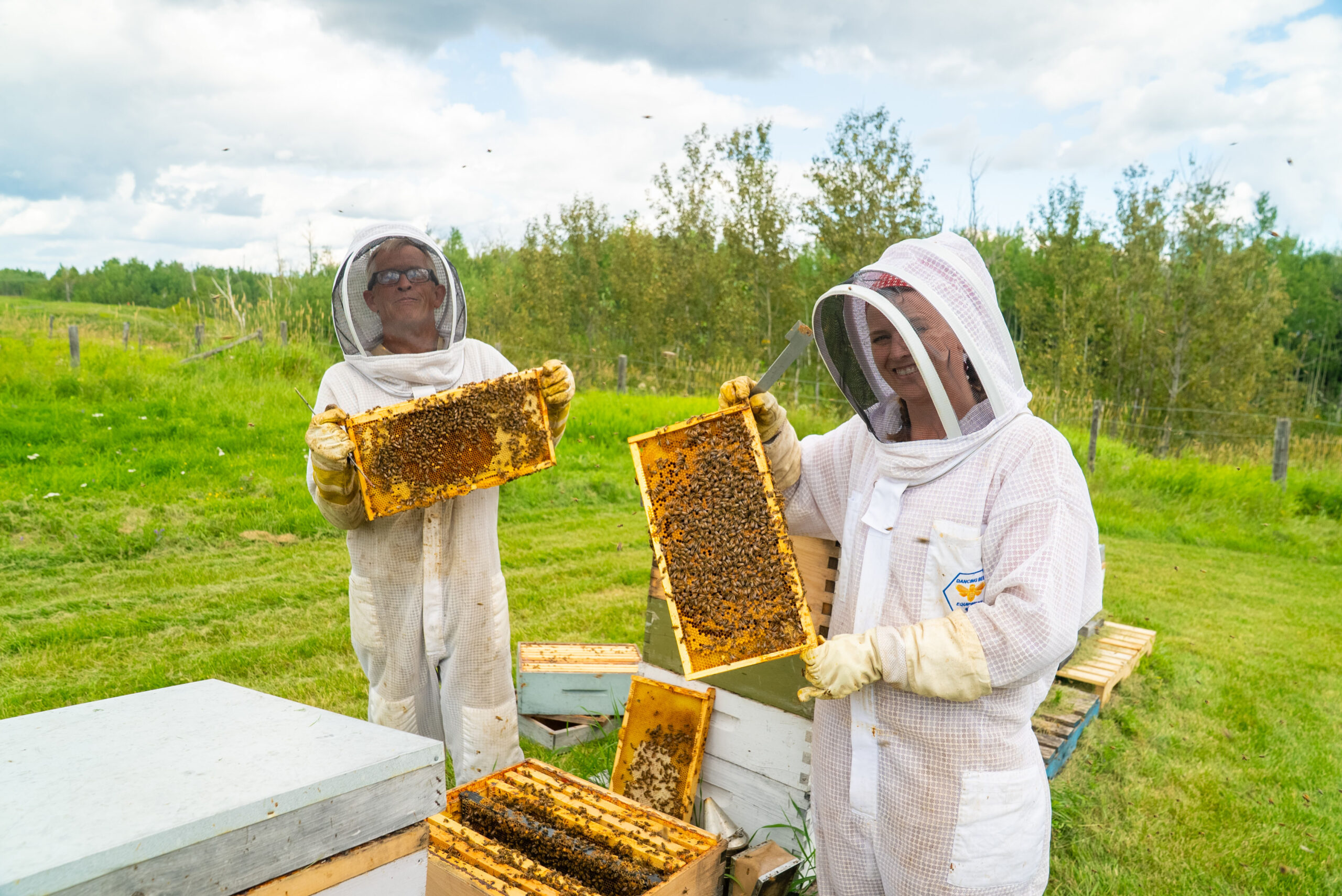
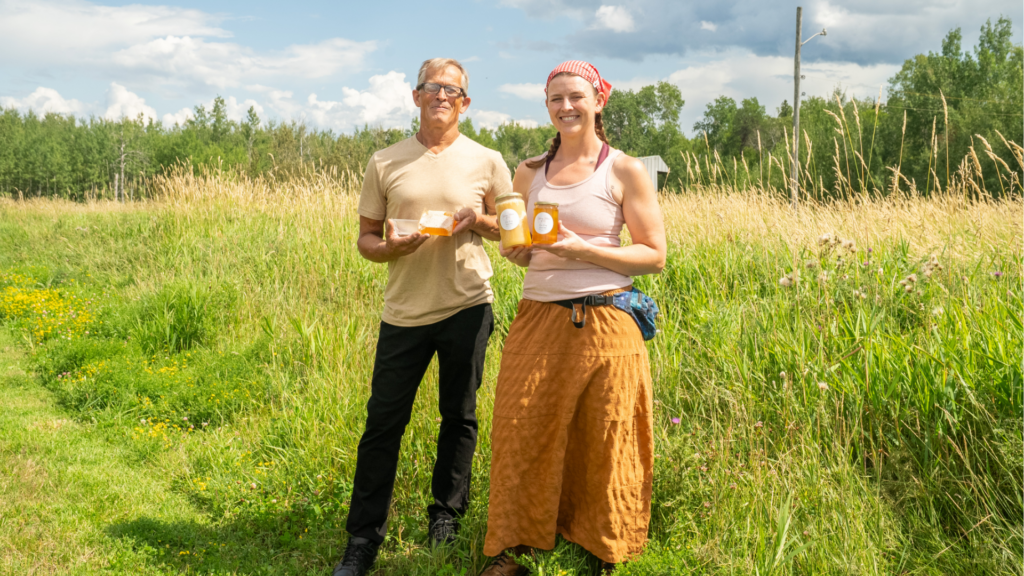
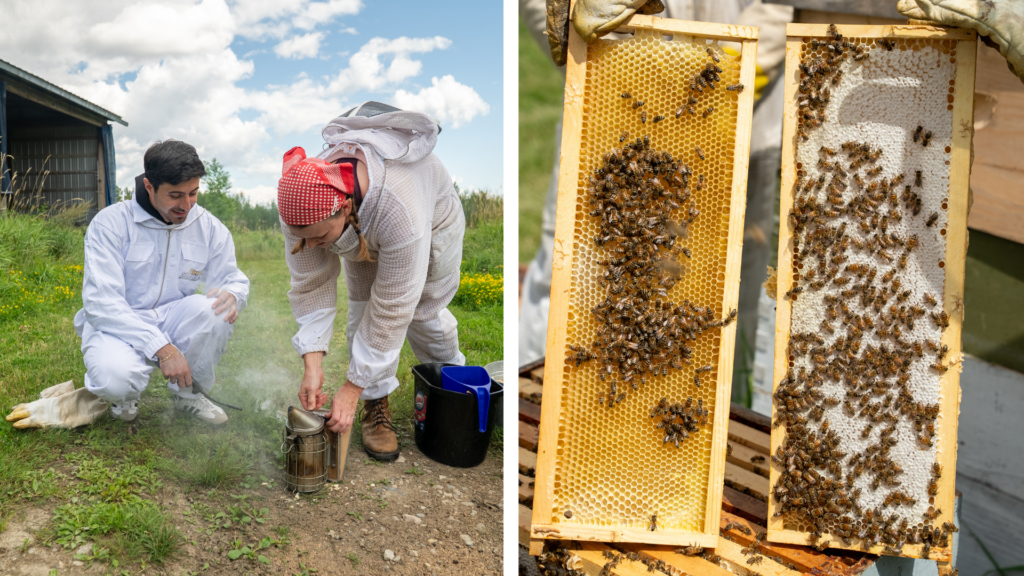
At Spring Bloom Acres, a small family farm run by father-daughter team Rob and Amanda, we booked the Apiary Tour & Honey Tasting Experience and pulled on bee suits and headed straight for the hives.
With a smoker lit, we got an up-close introduction to the complex little world inside: queen bees, workers, brood and honeycomb, and the enormous role these tiny pollinators play in the food system around them. From there, we followed the honey into the extraction facility, learning how it’s uncapped, extracted and eventually makes its way into a jar.
But perhaps the most interesting lesson came at the tasting table.
Honey changes depending on what’s blooming around the hive. Floral source, season and geography influence its colour, aroma and flavour, meaning two jars of honey produced in different places or even at different times of year can taste remarkably different.
That’s terroir in its sweetest form.
We tasted Spring Bloom’s own honey alongside honey from neighbouring apiaries, spread over freshly baked bread made by Amanda. There were subtle differences to discover from one to the next, though we’ll admit the chocolate honey didn’t require much deliberation before becoming a table favourite.
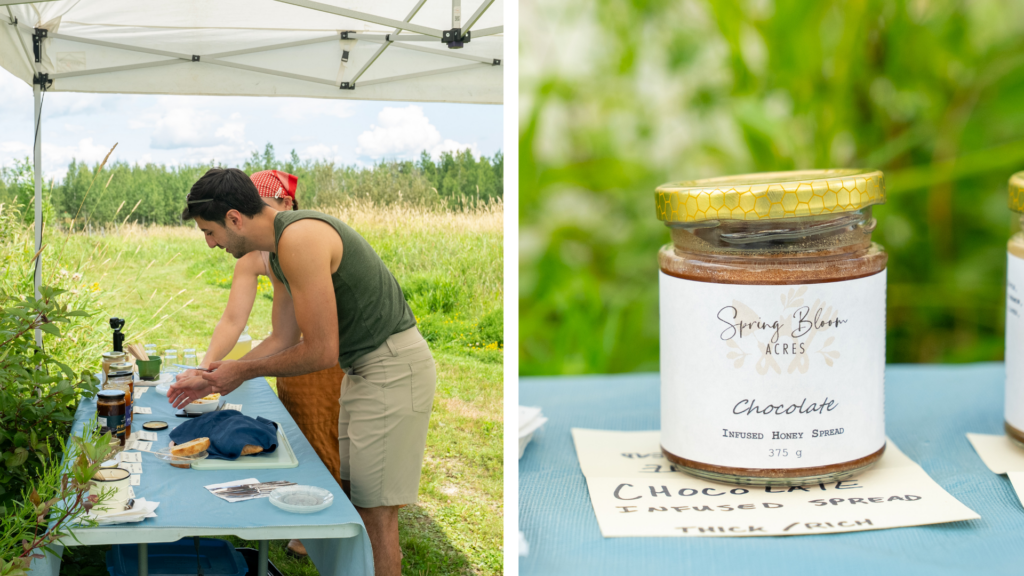
It’s easy to think of honey as simply something in a squeeze bottle. Standing among the hives changes that. Suddenly, a spoonful of honey becomes a snapshot of everything blooming within flying distance of the colony.
Bison du Nord
86454 Airport Road, Earlton (View Map)
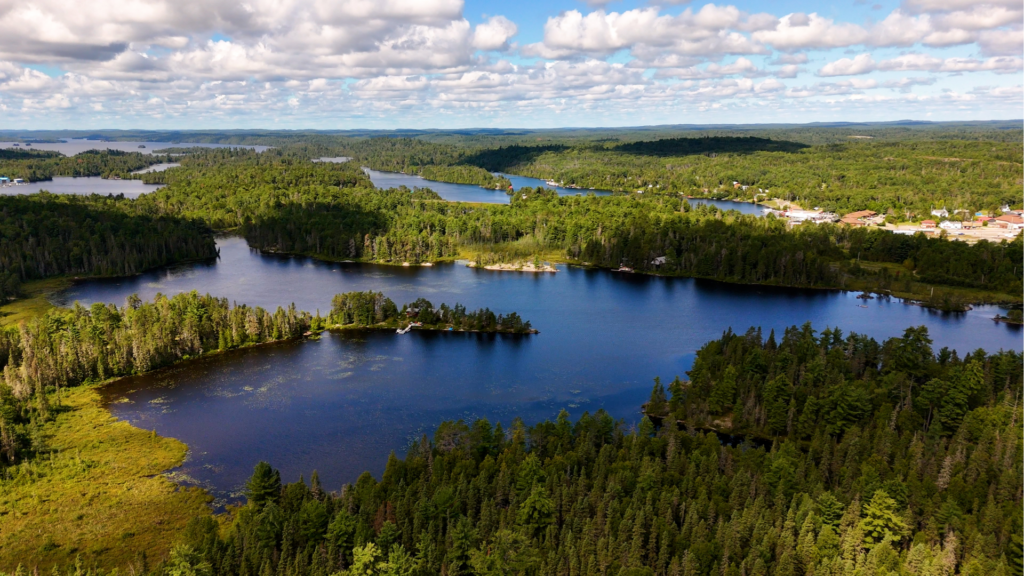
Drive north from Temiskaming Shores toward Earlton and the agricultural character of the region becomes impossible to miss. Broad fields stretch toward the horizon under enormous Northern Ontario skies.
It’s here that Pierre Bélanger has been raising bison for more than half a century.
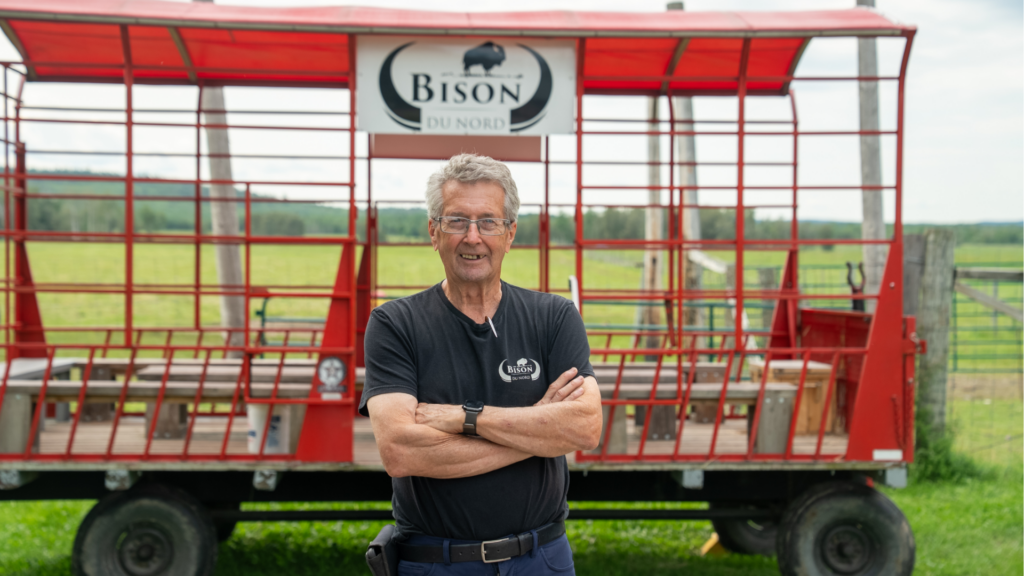
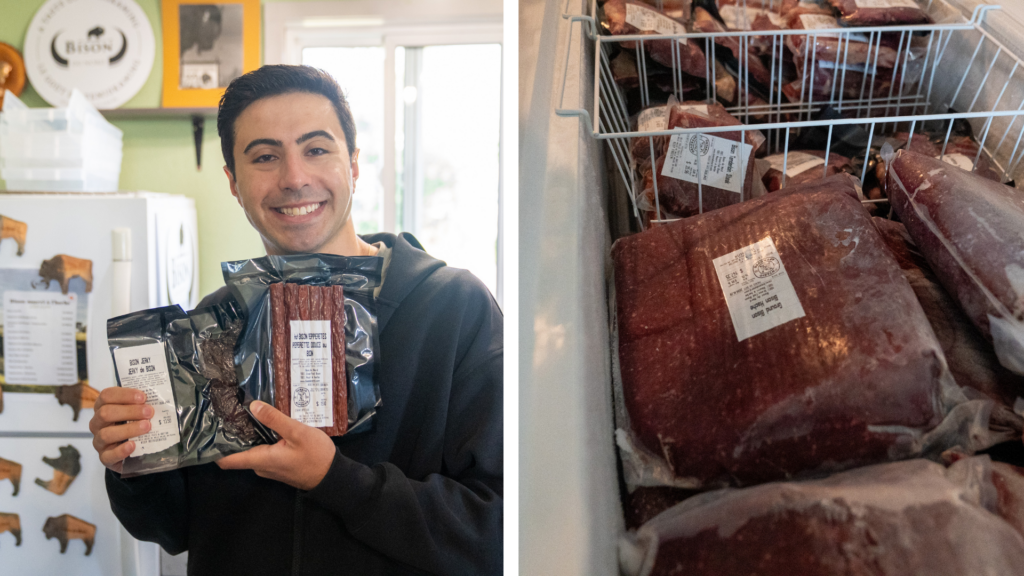
Bison du Nord began in 1972, when Pierre and his father, Laurent, decided to try something decidedly unusual for the time: raising bison on rugged Northeastern Ontario farmland. Today, the family has a herd of roughly 350 animals and is among the oldest bison farms in Canada. Pierre’s son Charles now works alongside him, carrying the operation into another generation.
Walking the farm with Pierre, it was hard not to be struck by how naturally the animals seem to belong against this landscape.
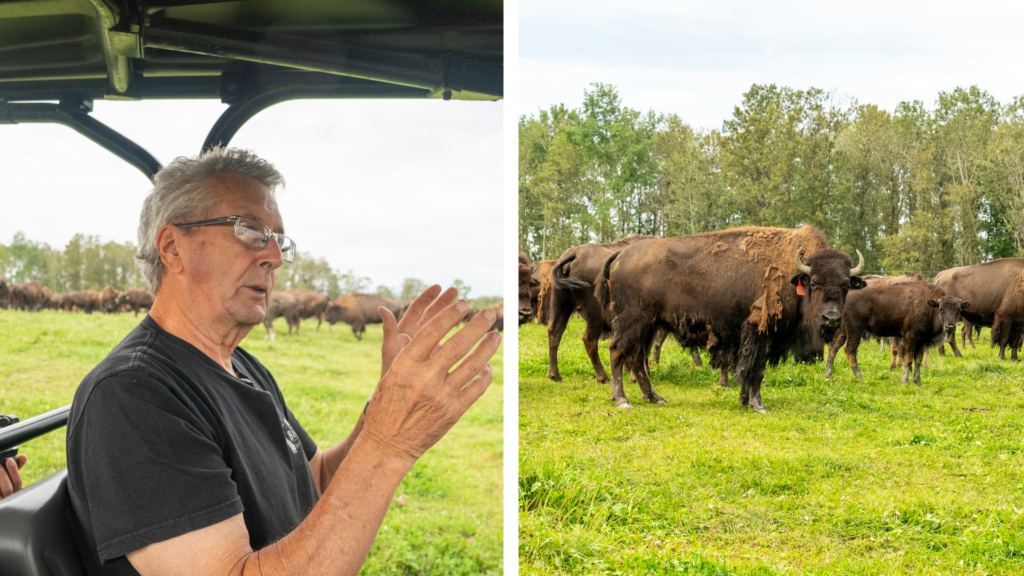
Bison du Nord’s animals graze outdoors year-round, feeding on pasture through the summer and hay or hay silage during winter. The farm practices rotational grazing and is both Animal Welfare Approved and Certified Grassfed by A Greener World. Its bison is 100 per cent grass-fed and grass-finished.
Summer visitors can book a Farm Tour, a great way to get close enough to these extraordinary animals to understand them differently. The tour takes guests by wagon into the pastures where the herd grazes before moving through the farm’s corrals and handling facilities. Before leaving, we stopped at the farm boutique for bison jerky and pepperettes, taking a little taste of the farm with us.
But the Bison du Nord experience doesn’t end at the farm gate — Bison du Nord is Feast On® certified and supplies its bison to restaurants in the region. Earlier in our trip, we found it on the menu at Dida’s Gastropub in Earlton (also Feast On® certified). There’s something powerful about meeting the farmer, standing on the land where an animal was raised, and then seeing that farm named on a restaurant menu just down the road.
Breault Family Farm
117411 Sale Barn Road, New Liskeard (View Map)
At Breault Family Farm, the idea of making the most of what the land provides takes another form.
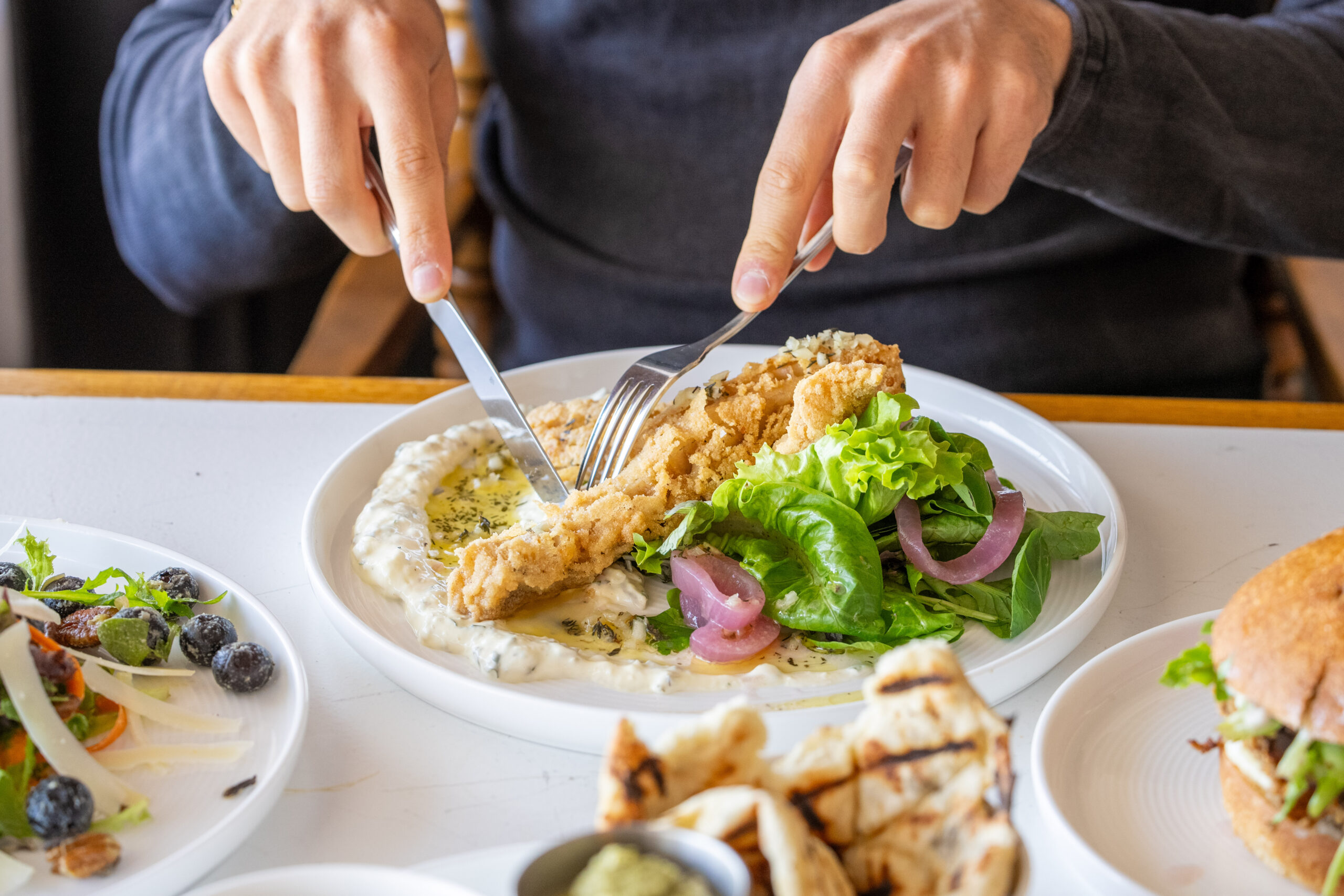
The working family farm raises beef alongside pasture-raised chicken, pork and turkey. Its cattle are grass-fed and finished with locally grown barley, and the farm operates an on-site store where visitors can shop directly from the people producing their food.
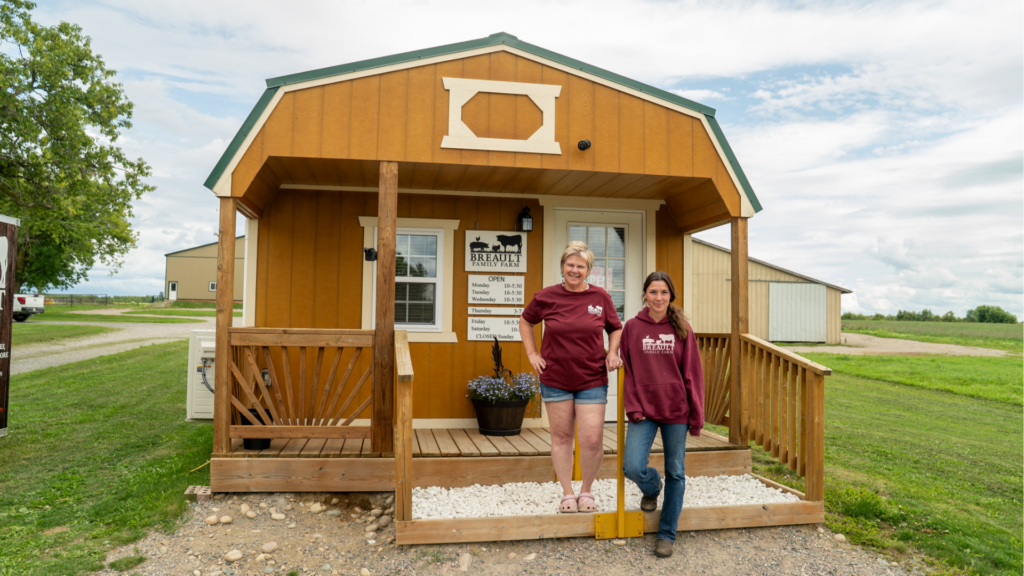
Our visit took us behind the scenes of everyday farm life, past cows and chickens, chicks and, naturally, a farm dog, before ending in the boutique. It was there that one of the farm’s more unexpected products caught our attention: handcrafted skincare made with grass-fed beef tallow.
The tallow is blended with organic oils and essential oils and hand-whipped in small batches. It’s a fascinating example of value-added agriculture, but also of something much older: finding a use for more of what an animal provides.
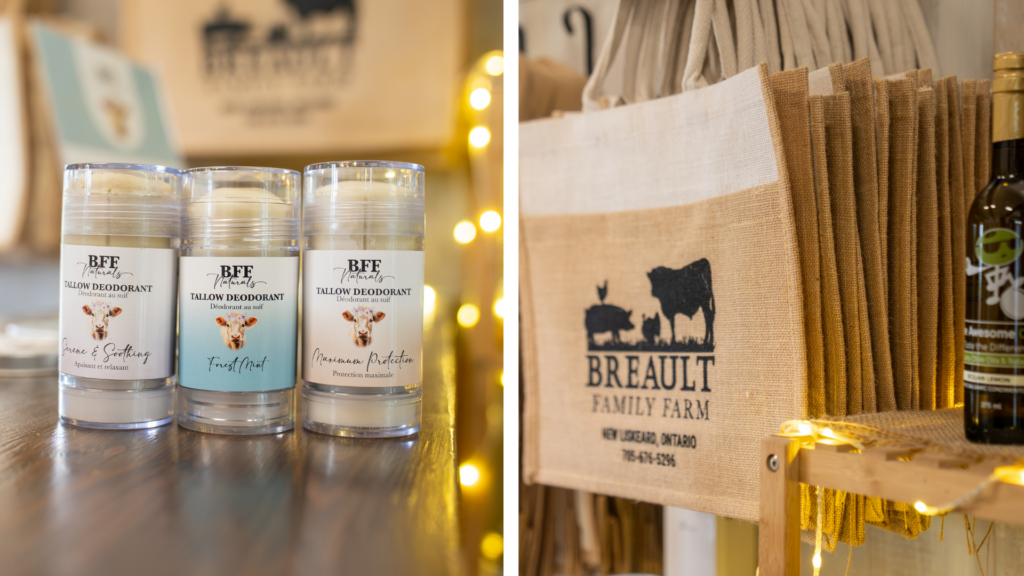
In conversations about sustainable food systems, it’s easy to get lost in big ideas. Farms like Breault make those ideas wonderfully practical. Sustainability can also look like finding value in something that might otherwise be overlooked, creating another product and another source of farm income in the process.
Here, nothing exists in isolation. The animals, the feed grown nearby, the farm store and the products on its shelves are all part of the same agricultural ecosystem.
Arana Orchards
177271 Bedard Rd, New Liskeard (View Map)
If the farms around Earlton show you the scale of agriculture in the Little Clay Belt, Arana Orchards invites you to get right into the field.
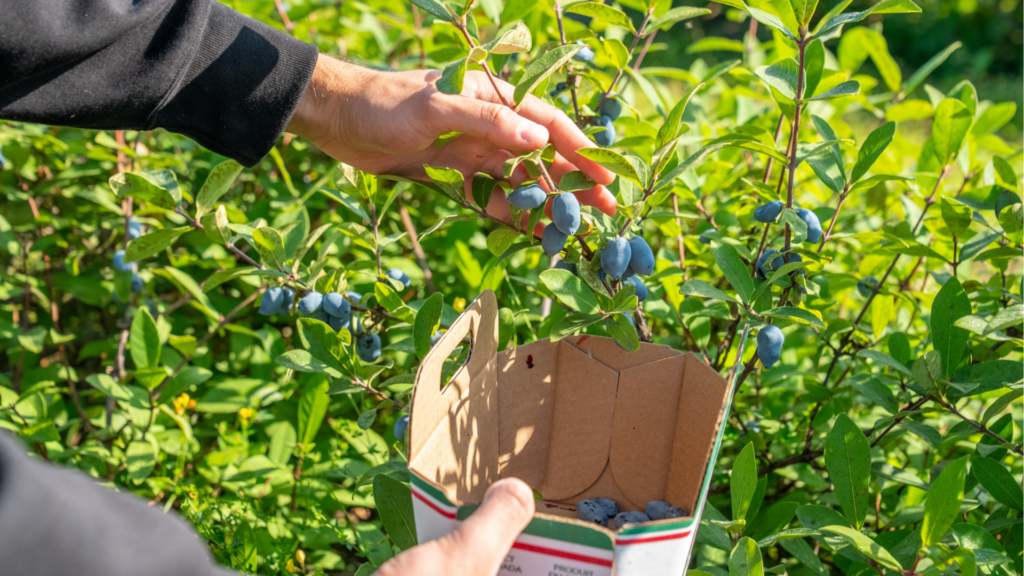
They’re seasonally open for U-Pick, and we came for the haskaps. Long, deep-blue berries sometimes described as looking like an elongated blueberry, haskaps are particularly well suited to cold climates. At Arana Orchards, which our hosts told us is Ontario’s largest haskap grower, we headed into the rows to pick them ourselves.
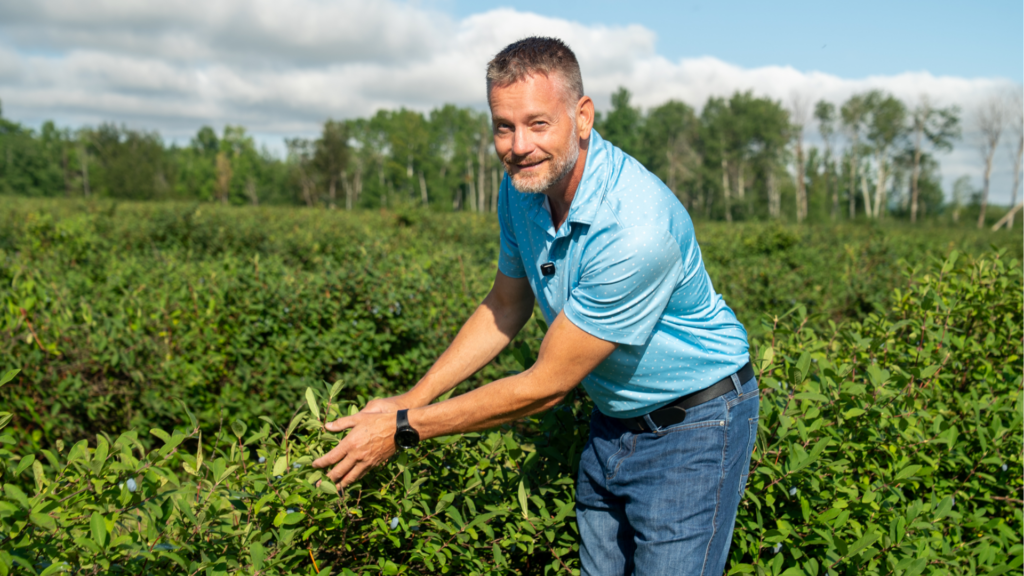
We sampled varieties with wonderfully memorable names—“Beauty” and “Beast”—and discovered just how delicate a ripe haskap can be. A gentle tap can be enough to send one tumbling from the branch.
Sweet, juicy and deeply coloured, they’re another opportunity to taste what Northern agriculture can be.
There’s something deceptively simple about picking fruit from a plant and bringing it right home to eat – it collapses the distance that’s usually between ourselves and our food. Here, there’s no transport truck, produce aisle or package separating the berry from the place where it grew. Here, it’s just farm to face!
Whiskeyjack Beer Company
485 Ferguson Avenue, Haileybury (View Map)
After spending a few days meeting the farmers and producers behind Temiskaming’s food, Whiskeyjack Beer Company felt like a fitting place to bring many of those threads back together.
Craft beer is, of course, an agricultural product—built from grain and hops, transformed through the work of the brewer. But at Whiskeyjack, the connection to the surrounding food-producing region extends beyond what’s in the glass. The kitchen has made a point of working with local suppliers, so it’s another place where the agricultural landscape surrounding Temiskaming Shores finds its way onto the table.
That feels especially appropriate here. Founder Luc Johnson grew up in a small Northern Ontario town with a love of the outdoors and the simple pleasure of sitting around a campfire with friends and a cold beer. That Northern identity runs right through the brewery.
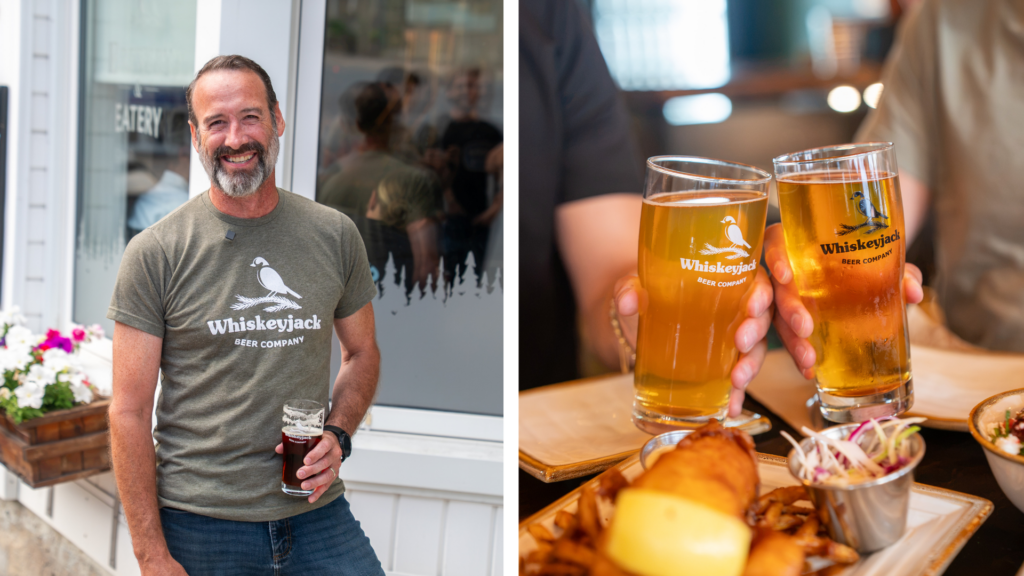
Even the name looks to the landscape. The whiskey jack, or Canada jay, is a hardy year-round resident of Canada’s forests, comfortable in conditions that send many other birds south.
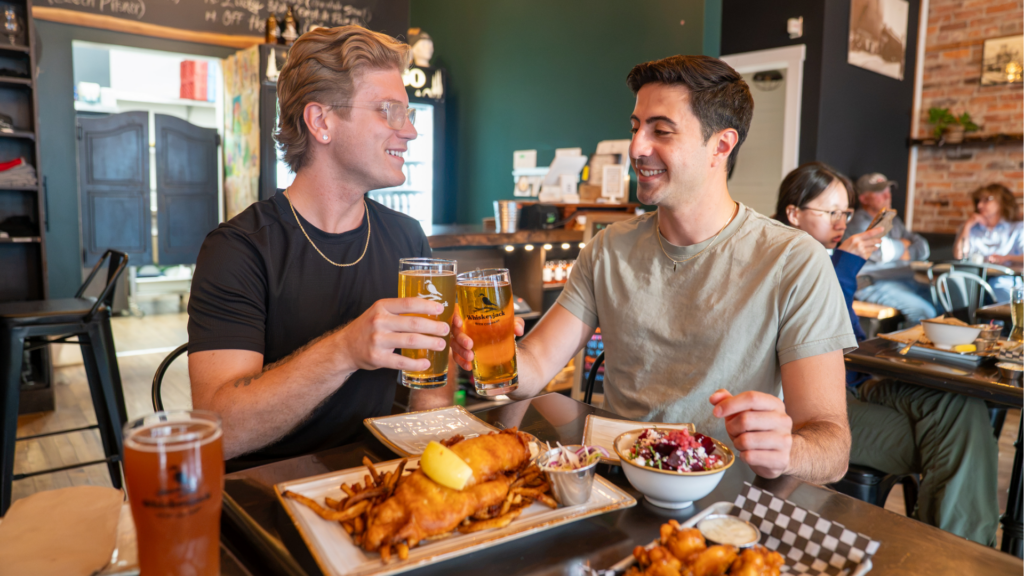
We toured the brewery before settling in for dinner, trying fish and chips, a beet summer salad and wings with honey-garlic sauce alongside the beer. One particularly appropriate pour was Cold Front Lime, crisp and dry and named with a wink to the kind of winter anyone farming—or living—in this part of Ontario knows well.